
Crafting content briefs is a foundational step in content strategy, but it doesn’t have to be slow or tedious. Traditional methods often involve hours of manual research, keyword planning, and structural guesswork. AI changes that.
Today, creating content isn’t just about writing, but it’s about writing with precision. A well-structured, SEO-ready, and AI-optimized brief ensures your content speaks directly to audience needs and search intent from the start.
AI tools now enable content teams to generate detailed, data-backed briefs in minutes. This shift not only saves time but also improves consistency, relevance, and visibility in search results.
In this guide, you’ll learn how to create winning AI content briefs fast. Whether you’re a solo freelancer or part of a growing agency, this step-by-step process will help you streamline planning, reduce friction, and set every piece of content up for success.
What Is An AI Content Brief?
An AI content brief is a structured document generated by artificial intelligence to guide the creation of content, such as blog posts, articles, or videos. It typically includes elements such as the primary keyword, audience insights, content goal, suggested article structure, SEO guidelines, and relevant competitor insights.
By automating the briefing process, AI content briefs help streamline content creation, ensuring consistency and alignment with strategic goals.
The brief acts as a roadmap, helping writers produce targeted, strategic content aligned with business objectives and audience expectations.
A great AI content brief doesn’t just list keywords; rather, it builds a roadmap for content that ranks, engages, and converts. Here’s what a high-quality content brief should include:
- Primary Keyword & Search Intent: Clearly define the main keyword and match it to user intent.
- Target Audience: Specify who the content is for, including persona or segment.
- SEO Title & Meta Description: Include a suggested title and meta description for better CTR.
- Structured Outline: Provide a clear hierarchy of H2s and H3s based on SERP data.
- User Questions (PAA): Add common search questions to address real user queries.
- Secondary & Semantic Keywords: Include related terms to improve topical depth.
- Recommended Length & Format: Suggest ideal word count and content type (e.g., guide, list).
- Tone & Style Guidelines: Define tone, voice, and any brand writing rules.
- Linking Recommendations: Suggest internal and external links to boost SEO authority.
- Call-to-Action (CTA): Provide a clear CTA that aligns with business goals.
To see how marketers are putting these briefs into action across campaigns, check out How Marketers Use AI Content in Their Workflow.
How Can I Create an AI-Generated Content Brief?
Creating an AI-generated content brief can save time, improve clarity, and align your writing process with clear objectives. AI tools make it easier to build structured outlines that reflect your goals, audience, and SEO strategy. Here’s a step-by-step guide to creating one effectively:
1. Define Your Content Goals
Start by identifying the main purpose of your content. Decide whether your aim is to educate, persuade, inspire, or entertain. A clear goal helps the AI generate a brief that matches your intent and tone.
2. Identify Your Target Audience
Specify who you’re writing for. Include details such as age group, interests, pain points, and professional background. The more specific you are, the better your AI-generated brief will align with your readers’ needs.
3. Choose Relevant Keywords
Select SEO keywords that reflect your topic and audience intent. Well-chosen keywords guide the AI to create a brief optimized for visibility and engagement.
4. Select an AI Content Brief Generator
Use AI-powered platforms that specialize in creating content briefs. Here are some reliable options:
- KIVA (by Wellows): An advanced AI SEO agent that builds data-driven content briefs using LLM visibility, SERP analysis, and real-time keyword clustering. Ideal for content marketing agencies, startups, and consultants seeking precision and automation.
- Frase: Generates research-backed content briefs by analyzing top-ranking pages and competitor content.
- QuillBot: Helps outline everything a writer needs, from goals to structure, ensuring clarity and coherence.
- WriteCream: Quickly creates detailed, structured content briefs in one click, perfect for fast-paced workflows.
5. Input Your Information
Enter your prepared details—goals, audience profile, and keywords—into your chosen tool. The AI will then use this information to build a brief tailored to your content objectives.
6. Review and Customize the AI Brief
Once the brief is generated, review it carefully. Refine tone, structure, and focus to match your brand’s voice and content strategy. AI-generated outlines are a starting point—adding human insight ensures quality and relevance.
Before finalizing the brief, you can run sections of the draft through the free AI Humanizer tool by Wellows to smooth robotic tone and make the outline feel more natural, clear, and aligned with your brand’s voice.
An AI-generated content brief acts as a blueprint for creating impactful, consistent, and SEO-optimized content. It guides writers, marketers, and AI tools toward producing material that aligns with business goals and audience expectations. Below are the key elements every effective AI-generated content brief should include:
- Project Overview: Start with a concise summary that explains the content’s purpose, target audience, and main objectives.
- Target Audience: Include details such as demographics, interests, and pain points to ensure the content resonates.
- Keywords and SEO Strategy: List primary and secondary keywords, along with SEO guidelines to improve visibility.
- Content Structure and Format: Provide a logical outline with headings and subheadings to guide flow and readability.
- Tone and Style: Define the desired tone—professional, conversational, or educational—to maintain consistency.
- Call to Action (CTA): Add clear next steps like subscribing, booking a demo, or reading related articles.
- Metadata: Suggest optimized title tags and meta descriptions for better click-through rates.
- Internal and External Linking Strategy: Recommend related internal pages and authoritative external sources.
- Visual and Media Recommendations: Include ideas for images, infographics, or videos to enhance engagement.
- Performance Metrics: Define KPIs such as engagement rate, dwell time, or conversions to measure success and monitor early signs of content decay before rankings, impressions, and clicks start slipping.
A comprehensive AI-generated content brief combines creativity with structure, ensuring your team—and your AI tools—produce consistent, engaging, and high-performing content every time.
Steps to Create an AI Content Brief Using KIVA (Legacy Feature)
KIVA is a legacy content intelligence feature within Wellows.
While Wellows now focuses on AI search visibility and GenAI discovery at the platform level, this legacy workflow continues to support structured content brief creation for teams using earlier setups.
What is KIVA?
This legacy feature was designed to convert keywords and SERP signals into structured content briefs, supporting intent alignment, topical coverage, and AI-readiness as part of Wellows’ earlier content workflows.
1. One-Click Brief Generation (Fast & Automatic)
This option enables rapid brief creation using predefined analysis steps.
It was built for speed and consistency, especially for teams needing quick outputs without manual configuration.
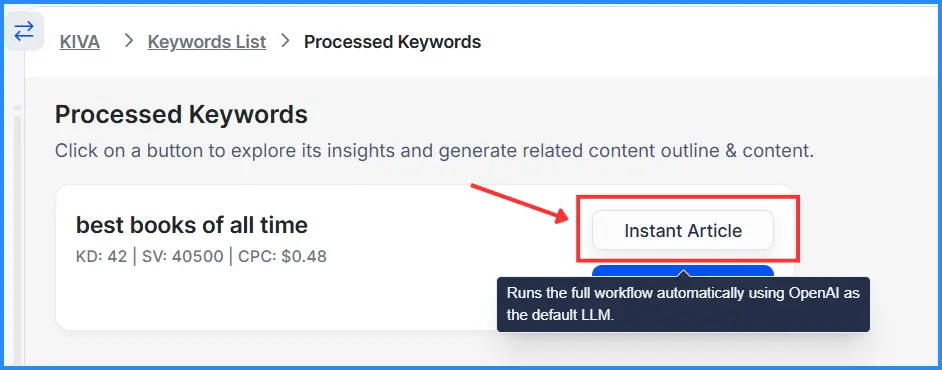
The workflow automatically evaluates:
- SERP structure and ranking patterns
- User search intent clusters
- People Also Ask question sets
- Foundational AI visibility signals
A structured content brief that can optionally be extended into a full draft.
2. Build With Insights (Custom & Controlled)
Build With Insights is the more hands-on legacy mode inside Wellows.
It allows manual selection of SERP inputs, content format, and intent signals for teams that require tighter editorial control.
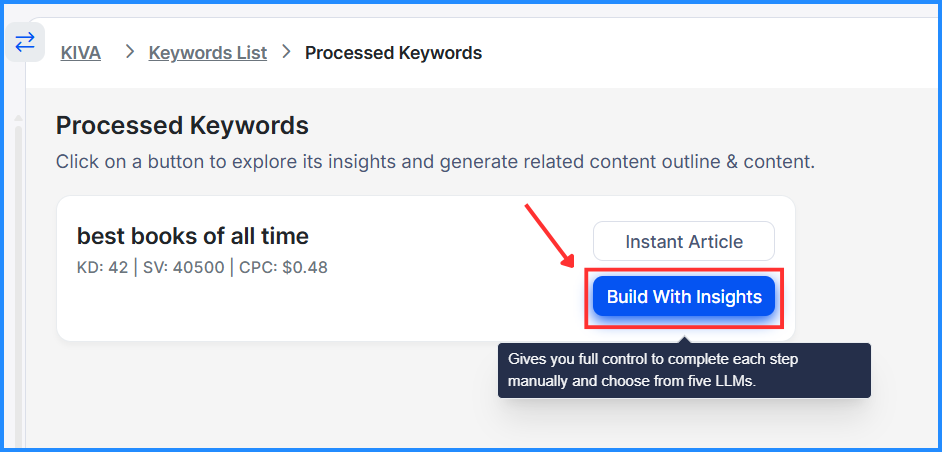
This mode is best suited for content strategists managing complex or high-stakes pieces.
Steps:
1. Select User Search Intent:
Align the brief with dominant user expectations behind the query.
2. Review the SERP:
Analyze ranking content types, competitive patterns, and opportunity gaps.
3. Expand Topical Coverage:
Include related queries and People Also Ask questions to strengthen context.
4. Choose Content Format:
Select between guides, listicles, explainers, or data-driven formats.
5. Generate the Brief:
The system compiles headings, keyword guidance, intent alignment, and structural recommendations.
What are the Benefits of Using AI Content Brief?
Using an AI Content Brief offers numerous benefits for content creators, SEO professionals, and Tech startups looking to streamline and enhance their content development process. Here are the key advantages:
Key Benefits of Using AI Content Briefs
You can create more, faster, with less manual effort.
AI Content Briefs automate research, outline structure, and keyword recommendations so your team can focus on writing instead of prep work. That means faster turnaround without sacrificing quality.
You scale without losing consistency.
Whether you’re creating 1 or 100 pieces, AI-generated briefs ensure tone, structure, and SEO best practices are consistent, helping your content maintain brand voice at any volume.
Your content gets smarter over time.
AI briefs evolve with data. The more you use them, the better they adapt to audience needs, SERP trends, and competitive gaps, making each piece sharper than the last.
Better briefs = better outcomes.
Writers get clarity, SEOs get structure, and editors get less cleanup. Everyone wins when the brief includes everything needed to produce high-performing content.
Top Examples of AI-Generated Content Briefs
1. KIVA: AI-Powered Content Brief Generator
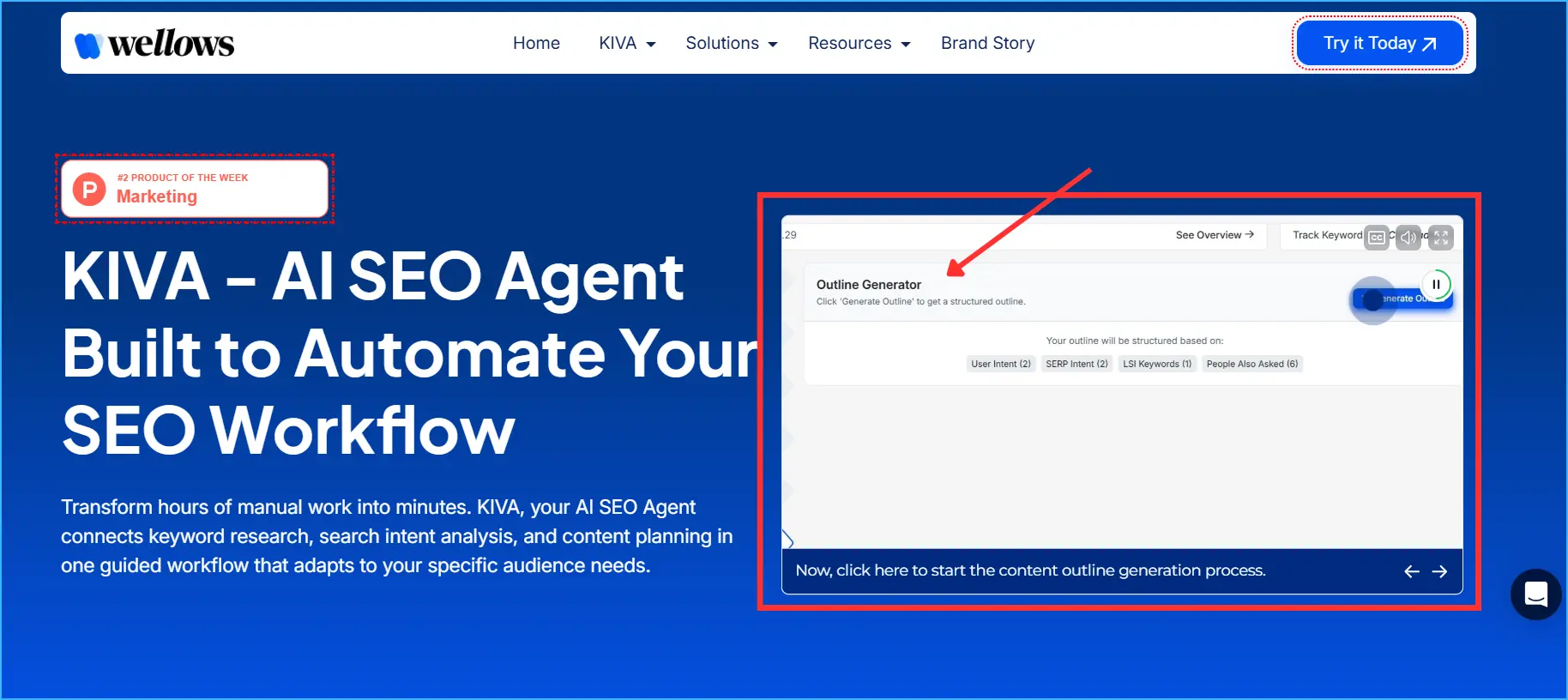
KIVA’s Content Brief generator transforms raw keyword data into structured, SEO-ready content outlines within minutes.
It merges insights from large language models (LLMs), search intent analysis, trending queries, and SERP data to generate briefs aligned with brand guidelines and both search engine algorithms and AI assistant formats.
Why It Stands Out:
- Comprehensive Data Fusion:
KIVA integrates multiple data layers—SERP visibility, LSI terms, LLM analysis, Reddit/LinkedIn trends, and People Also Ask queries—into one coherent brief.
This eliminates the need to switch tools for keyword research, topic clustering, or outline structuring.
- Two-Generation Modes for Flexibility:
Users can choose the “One Click Solution” to auto-generate a complete brief, including keyword mapping and user intent breakdown, or select “Build with insights” to customize LLM models, outline depth, and content type preferences.
- Optimized for Generative Search and AI Tools:
Every brief is designed for LLM retrieval, including structured sectioning, AI-friendly formatting, and mapped questions aligned with how users query AI tools.
The briefs are pre-loaded with Reddit insights and trending phrasing to increase citation and answer relevance.
If you’re aiming to get discovered across more search surfaces, check out how to create content based on SERP and LLM trends.
2. Frase AI:
Frase generates fast, research-driven content briefs based on live SERP data. It streamlines research by integrating SERP snapshots, competitor analysis, and outline recommendations into a centralized workspace.
Why It Stands Out:
- Built-In SERP Analysis:
Frase pulls top-ranking search results directly into the brief interface, helping users extract headings, keywords, and structural cues from real-time search competitors.
- Team Alignment and Efficiency:
The tool is designed for collaboration, enabling writers, editors, and strategists to align on briefs, content direction, and SEO priorities through shared templates and version control.
- Structured Brief Templates:
Frase offers pre-built brief templates and AI-generated outlines, accelerating the creation of consistent, high-quality content guides for any niche or content format.
3. Copy.ai:
Copy.ai offers a specialized “Content Brief from Keyword” workflow that automates brief creation by scraping the top 3 URLs on Google, identifying competitive gaps, and structuring metadata and outlines instantly.
Why It Stands Out:
- Fully Automated Planning Workflow:
The workflow generates titles, outlines, FAQs, meta descriptions, and content slugs based on a target keyword—no manual research required.
- Content Gap Identification:
It analyses top-ranking content to find frequently repeated topics and missed opportunities, making it easier for user to use its AI to find content gaps that support differentiation and bring freshness to their content strategy.
- Ideal for Fast-Turnaround Briefs:
AI’s brief generator is best suited for marketing teams and freelancers needing quick, reliable content frameworks without deep SEO tooling.
The hottest AI startups are behind many of the tools reshaping how briefs are built, optimized, and distributed.
Are There Free AI Content Brief Generators Available?
Yes, several free AI-powered content brief generators can help you create detailed and structured outlines in minutes. These tools are ideal for marketers, writers, and businesses looking to streamline their planning process without spending on premium software. Here are some of the best free options available:
1. Swiftbrief
Swiftbrief offers a free AI content generator that lets users create content briefs starting from a topic or keyword. It’s a quick, easy-to-use tool for lightweight, everyday use and helps structure content ideas efficiently.
2. Wittypen
Wittypen provides a free AI Content Brief Generator that builds detailed outlines from minimal input. It requires no sign-up or credit card, making it perfect for teams that want a fast, accessible solution for scaling content creation.
3. QuillBot
QuillBot’s AI Content Brief Generator helps users craft well-structured and professional briefs for various content types—blogs, landing pages, newsletters, and more. It’s free to use and ensures clarity and organization for each project.
4. Template.net
Template.net’s Free AI Brief Generator instantly produces editable briefs tailored to any purpose or industry. It supports both text and voice prompts, offering customization in format, style, and tone—no registration needed.
5. WriteCream
WriteCream’s AI Content Brief Generator simplifies planning by creating structured, ready-to-use content briefs in one click. It’s designed to save time, maintain consistency, and ensure your ideas are aligned with your goals.
Budget-conscious? Many lean SaaS startups kickstart content ops using free AI brief tools before scaling up their workflow.
Common Pitfalls to Avoid in AI Content Briefing
Even with tools, mistakes happen. Watch out for:
- Generic Outlines: Avoid briefs that list headers without insights
- Intent Mismatch: Writing answers users didn’t ask for
- Skipping Sources: Lack of quotes, data, or links weakens credibility
- Ignoring Format Preferences: Listicles, tutorials, and editorials serve different goals
FAQs
A good brief will have headings (H1–H3), primary and related keywords, user intent mapping, tone/style notes, prompts for each section, FAQs, CTAs, and source suggestions.
Yes—by analyzing top-ranking pages and PAA questions, AI spots missing topics or questions your article should answer. That gives your content depth and relevance.
AI content briefs can cut your planning time from hours down to just minutes, while ensuring consistent, SEO-optimized structure across pieces.
KIVA, Frase, Copy.ai, Surfer SEO, and Jasper are some of the top tools—each helps you generate structured, SEO-friendly briefs in just minutes.
Because it saves time, ensures SEO alignment, and helps you produce content that’s both relevant and strategically focused from the start.
Conclusion
Creating a winning AI content brief is about alignment: between your audience, your topic, and how AI (and search engines) interpret your content. Whether you’re a small startup or a large SEO agency, KIVA offers the fastest, most strategic way to go from keyword → structured brief → high-quality draft.
Read More Articles!
-
- Understand How to Write Content for People First, Not Search Engines
- Understanding Readability Score in AI Content
- Where to start with LLM Content Creation Strategy
- How to use People Also Ask data
- How Small Brands personalized AI content
- How to Optimize SEO Content Length for Higher Rankings?



![AI Visibility for B2B Marketing Agencies: The Shortlist-Defense Playbook [2026]](https://staging.wellows.com/wp-content/uploads/2026/06/ai-visibility-b2b-marketing-agencies.webp)


